Emergency Dentist in Canberra City
If a tooth is hurting, something has broken, or you have had a knock to the mouth, the quickest way to get help is to ring us on (02) 6247 9230. We try to keep time aside for urgent problems on the days we are open, and whoever answers will ask you a few questions to work out how soon you need to be seen and what you should do in the meantime. We cannot promise an appointment on the day you call — how much room there is depends on how the book is running — so it is worth calling early. If we genuinely cannot fit you in, we will tell you straight away and point you to the alternatives further down this page.
We are open Monday to Thursday, 8:30am to 5pm, and closed on Fridays, weekends and public holidays. If you need help while we are closed, there are several options in Canberra — see if we are closed below.
How urgent is it?
Call 000 or go to an emergency department
Some mouth and face problems are medical emergencies rather than dental ones. Healthdirect advises calling triple zero (000) or going straight to an emergency department if you are having trouble breathing, trouble talking or swallowing, there is a lot of blood going down your throat, or your mouth or tongue are very swollen (healthdirect — dental injury). Heavy bleeding in the mouth also needs urgent medical care, because of the chance your airway becomes blocked.
Where toothache or gum swelling is involved, healthdirect advises emergency care if it causes problems with breathing or speaking, or swelling around your eye or neck (healthdirect — toothache and gum swelling).
Do not wait for a dental appointment for any of these. Ring 000.
Call us the same practice day
- A knocked-out adult tooth — the most time-critical dental injury there is, and the instructions below matter
- Severe or worsening pain, particularly pain that keeps you awake or does not settle with pain-relief medicine
- Swelling of the gum, cheek or jaw
- A tooth broken with a painful or bleeding exposed surface
- A tooth loosened or pushed out of position by a knock
- Pain together with a fever over 38°C, pus, or a bad taste in your mouth — healthdirect lists these as reasons to contact a dentist or doctor
- Bleeding from a socket after an extraction that does not stop with firm pressure
Book the next available appointment
- A chip with no pain and no sharp edge
- A crown, veneer or filling that has come out but is not painful
- Mild sensitivity to cold that stops as soon as the cold is taken away
- A dull ache that comes and goes
- Food packing between two teeth
- A denture that has cracked or become uncomfortable
- An orthodontic wire poking your cheek
As a general guide, healthdirect suggests seeing a dentist as soon as possible if toothache and gum swelling last more than two days, or do not improve when you take pain-relief medicines.
If a tooth has been knocked out
An adult tooth that has come out completely can often be saved, but only if it is handled correctly and quickly. Healthdirect’s first aid is:
- Find the tooth and hold it by the crown — the white part you normally see in the mouth. Do not touch the root.
- If it is dirty, rinse it quickly in warm water. Do not scrub it and do not soak it.
- Try to put it back into the socket, then bite gently on a clean piece of cloth to hold it in place.
- If you cannot get it back in, keep it in a little milk or saliva so that it does not dry out.
- Aim to be seen within 30 minutes. It may still be possible to save the tooth up to two hours after the injury.
Ring us straight away, or go to the nearest hospital emergency department if we are closed.
Different advice applies to a child’s baby tooth — a knocked-out baby tooth should not be put back in. Call us and we will tell you what to do next.
There is more detail on our knocked-out tooth page.
What you can do while you wait
These are healthdirect’s self-care measures for dental pain, swelling and injury. They are there to keep you as comfortable as possible until you can be seen — none of them treat the underlying cause.
- Rinse your mouth with warm water to clear any debris. Gargling with salt water may relieve a mild toothache — do not swallow it.
- Hold a cold compress, such as an ice pack wrapped in a cloth, against the side of your face. Never apply heat to a swelling.
- Rest with your head propped up on a pillow. Lying flat can make dental pain feel worse.
- Eat soft foods that are easy to chew and swallow, and avoid very hot or very cold drinks.
- Keep brushing with a soft toothbrush and fluoride toothpaste.
- If there is bleeding from an injury, apply pressure with a clean towel or dressing.
- For pain relief, ask your doctor or pharmacist — this could include paracetamol or ibuprofen, and you should always follow the instructions on the packet. Avoid high doses of aspirin, as it can increase bleeding, and do not give aspirin to a child under 12 unless a doctor has told you to.
- Never hold an aspirin tablet against the gum or tooth. It burns the soft tissue and makes things worse.
Healthdirect also notes that antibiotics are usually not used for a toothache unless there is a clear infection, and that most dental injuries do not require them. When you call, please tell us about any other medical conditions you have and any medicines you take.
What happens at an urgent appointment
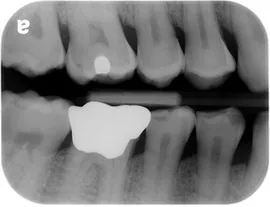
We start by listening to what has happened and when, then examine the tooth and the tissues around it. We will take an X-ray if we need to see between or inside a tooth, because an examination on its own cannot show that. If you are in pain, getting you comfortable comes first.
You will then get a plain explanation of what we found, what your options are, and an estimate of the cost before anything goes ahead. Urgent care often runs in two stages: settling the immediate problem now, then restoring the tooth properly at a later visit once things have calmed down. Our payments and health funds page covers how payment works.
What is worth knowing
An urgent appointment is about getting a problem under control, and it is not always possible to finish treatment in a single visit. Sometimes the sensible first step is to relieve the pressure and pain and let inflammation settle before rebuilding the tooth.
Not every tooth can be saved. Where a tooth has broken deep below the gum, or an infection has destroyed too much of the bone supporting it, removing it may turn out to be the better option. If that is the situation, we will talk it through with you and explain the alternatives rather than deciding for you.
It is also worth knowing that pain relief and antibiotics manage symptoms rather than fixing the cause, and that pain settling by itself does not always mean the problem has resolved — a nerve that has died stops hurting while the underlying infection continues. Treatment has its own risks, including bruising, discomfort for a few days, and temporary numbness after local anaesthetic. We will explain the ones that apply to you before you agree to anything.
If we are closed
The practice is closed on Fridays, weekends, public holidays, and outside 8:30am to 5pm. We do not run an after-hours service, and there is no on-call number that reaches a dentist here outside those times. If something happens while we are closed, seek medical advice — these are the options in the ACT.
healthdirect — 1800 022 222. Available 24 hours a day, 7 days a week, to speak to a registered nurse about any health concern (healthdirect). A good first call if you are unsure how urgent your problem is.
Canberra Health Services Walk-in Centres — 7:30am to 10pm, 7 days a week. Free, with no appointment or referral needed, for anyone over one year of age, and a Medicare card is not required. They can treat a minor dental abscess, though they state you will still need to see a dentist afterwards, and they cannot treat dental injuries or infections other than minor abscesses (Canberra Health Services).
Public emergency dental — Central Health Intake, (02) 5124 9977. ACT residents who are the primary holder of a Services Australia Pension Concession or Health Care Card, a DVA white or gold Veteran Card, an ACT Services Access card, or a Commonwealth Seniors Health card may be able to access emergency dental care after being triaged. The emergency appointment fee is currently $52.50 and covers treatment of your most urgent dental problem (Canberra Health Services — Adult dental).
An emergency department, or 000, for the warning signs listed above, and for any injury with severe bleeding you cannot control with pressure.
Once we reopen, call us and we will arrange a follow-up. Care received elsewhere for an emergency is usually a temporary measure, and the tooth will still need to be assessed and restored properly.
Where to find us
Hobart Place Dental is on the 10th Floor, 1 Hobart Place, Canberra City ACT 2601, a short walk from the city centre. Our dentists have looked after Canberra City patients from this building since 1965, and we see both existing and new patients for urgent appointments. Call (02) 6247 9230.
Urgent problems we see
- Toothache — what the pain may mean and how to ease it before your appointment
- Broken tooth — chips, cracks and fractures, and what can be done about them
- Dental abscesses — infection, swelling and how it is managed
- Knocked-out tooth — time-critical first aid for an avulsed tooth
- Wisdom teeth — pain and swelling from an erupting or impacted wisdom tooth